
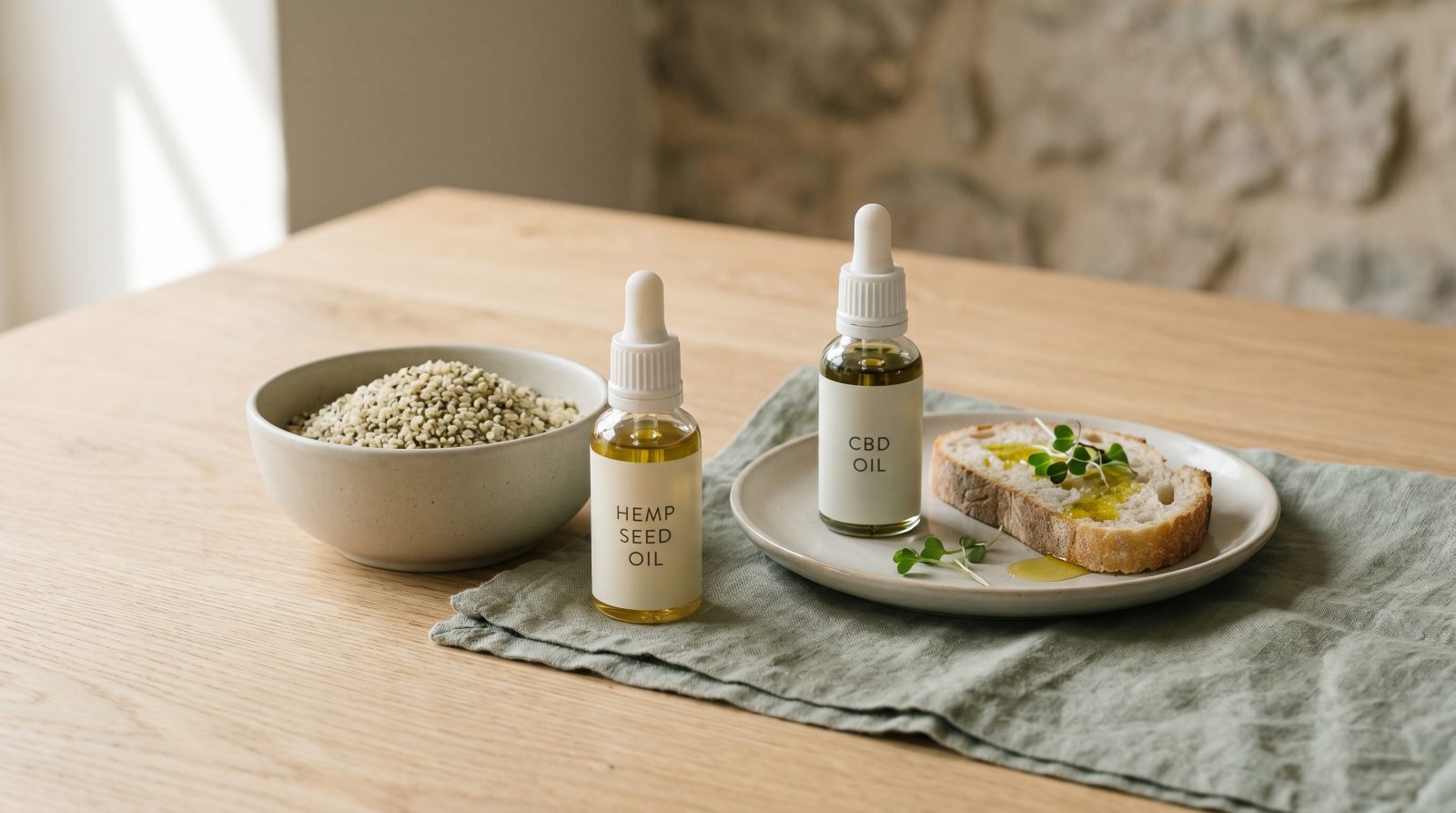
Hemp seed oil and CBD oil are sold under similar names but are different products with different sources, contents, regulations, and prices. Mistaking one for the other is the single most common error in the hemp aisle.
Source determines everything
Hemp seed oil is mechanically pressed from hemp seeds. The seeds themselves contain only trace cannabinoids, and the oil that comes out of them does too. Hemp seed oil is a food and cosmetic ingredient.
CBD oil is extracted from the flowering heads and leaves of cannabis plants, including hemp varieties. CBD is the second most abundant cannabinoid in cannabis (after THC). It is non-intoxicating but biologically active.
The two products begin in different parts of the plant and end up in different aisles of Canadian retail.
Regulatory framework
In Canada, hemp seed oil is governed by food and cosmetic regulations administered by the Canadian Food Inspection Agency and Health Canada's Food Directorate. It is sold openly in grocery stores, natural food stores, and online retailers.
CBD products are governed by the Cannabis Act and the Cannabis Regulations. Sale to consumers is restricted to provincially authorised cannabis retailers (the Ontario Cannabis Store, BC Cannabis Stores, the SQDC in Quebec, and so on). Selling CBD outside this channel is not legal in Canada, regardless of how the product is marketed. CBD cannot legally be sold in grocery, pharmacy, or health food stores in Canada.
How to tell them apart on a label
| Indicator | Hemp seed oil | CBD oil |
|---|---|---|
| Listed ingredient | "Hemp seed oil" or "Cannabis sativa seed oil" | "Cannabidiol" or "CBD" with mg amount |
| CBD content | Not listed (or "trace") | Listed in milligrams per bottle and per serving |
| Excise stamp | None | Federal cannabis excise stamp |
| Where sold | Grocery, online, natural food stores | Provincial cannabis retailers only |
| Typical price (30 mL) | CAD 5 to 15 | CAD 40 to 100+ |
| Regulatory regime | Food and Drugs Act | Cannabis Act |
The economic motivation behind the confusion
Hemp seed oil retails for a small fraction of CBD oil's price. Unscrupulous online sellers sometimes market hemp seed oil with vague language ("rich in cannabinoids", "full spectrum hemp extract") to imply CBD content while remaining technically truthful. A reliable filter: if the bottle does not list a CBD amount in milligrams and was not bought from a provincially licensed cannabis retailer, it is hemp seed oil regardless of what the marketing copy implies.
What each product does
Hemp seed oil is a culinary and cosmetic ingredient. It contributes polyunsaturated fats and a balanced omega-6 to omega-3 ratio to the diet, and serves as a lightweight carrier oil in skincare. It produces no psychoactive or pharmacological effect at culinary doses.
CBD oil is a cannabinoid product. It is biologically active and interacts with the human endocannabinoid system. CBD has demonstrated clinical activity in specific contexts (notably epilepsy, where Epidiolex is an approved prescription product), and is studied in many others. Effects on common consumer concerns (sleep, anxiety, pain) are individual and not the same as a prescription medication. CBD also interacts with multiple common medications through the CYP3A4 and CYP2C19 hepatic enzymes, an important safety consideration covered on the dedicated CBD information site in the network footer.
If you are actually looking for CBD rather than culinary hemp seed oil, the CBD guide at cbdhempoil.ca covers forms, labelling and buying safely in Canada.