
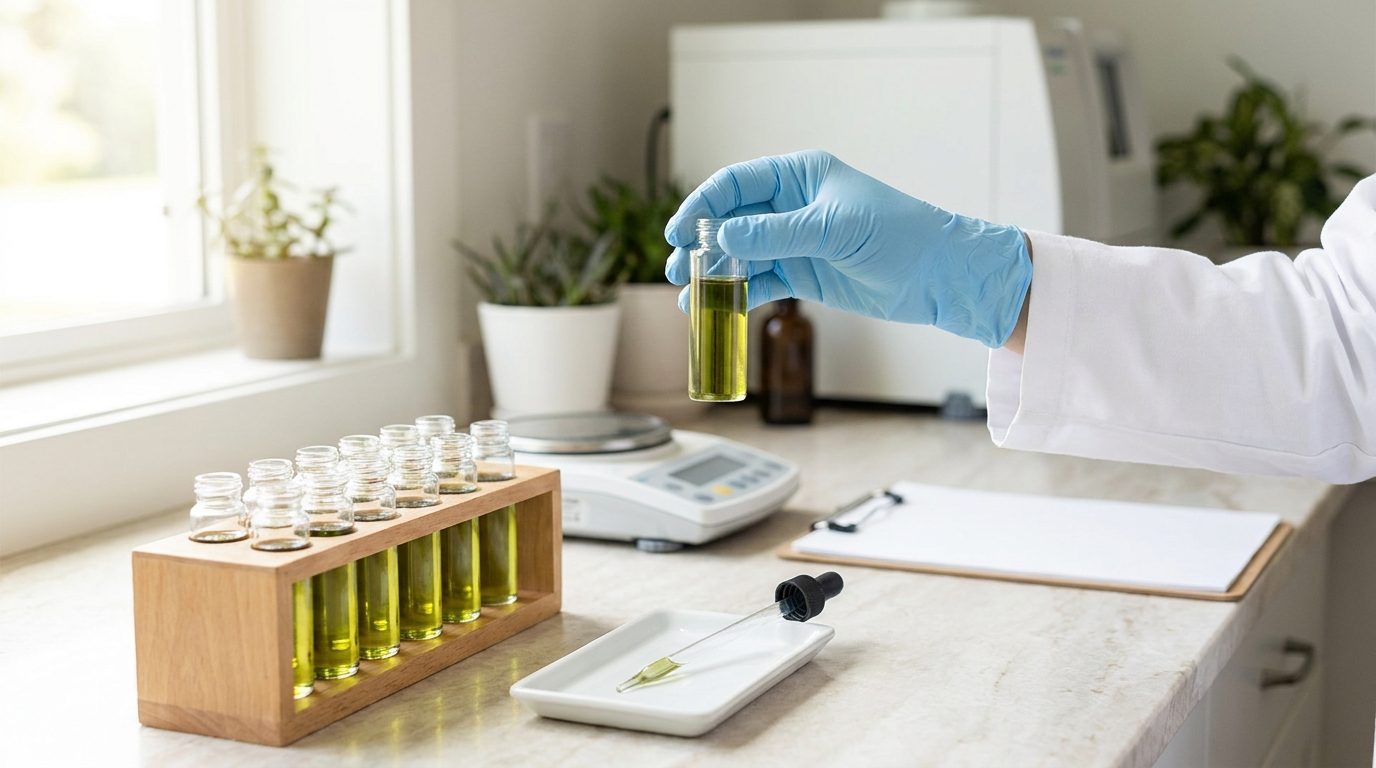
A certificate of analysis (COA) is the lab report behind a hemp product: what was measured, by whom, and what the numbers were. Brands increasingly publish them, and buyers increasingly ask for them. Reading one takes about two minutes once you know where to look.
The header: who tested what
Check three things first. The lab's name (an independent, accredited lab, not the producer's own bench). The sample identification (a lot or batch number that matches the package in your hand). The date (a COA from two years ago says little about this year's harvest).
Cannabinoid content
For hemp foods the THC line is the one most buyers look for. Canada has had no THC limit for hemp seed foods since March 2025, when the former limit of 10 parts per million was removed, so there is no regulated figure to check it against (products licensed as natural health products are the exception, at 10 parts per million); a clean result is usually reported as "ND" (not detected) or a low value in parts per million. For CBD products, check that the measured CBD matches the label claim within a reasonable margin; large gaps in either direction are a quality signal.
Microbiology and mould
Look for total plate counts, yeast and mould counts, and pathogen screens (Salmonella, E. coli). These matter most for seed products. Numbers should fall below the stated specification; the spec itself appears next to the result on a well-formatted COA.
Heavy metals and pesticides
Hemp is efficient at drawing minerals from soil, which is excellent for nutrition and means responsible producers test for lead, cadmium, arsenic, and mercury. Results are compared against food-safety limits. Pesticide panels are most relevant for non-organic crops.
Red flags
- No batch number, or one that matches nothing on the packaging
- The producer tested its own product with no external lab named
- Only cannabinoids reported, with no microbiology or metals for a food product
- A COA that is requested and never arrives
For how COAs fit into a wider quality check, see the buyer's glossary.