
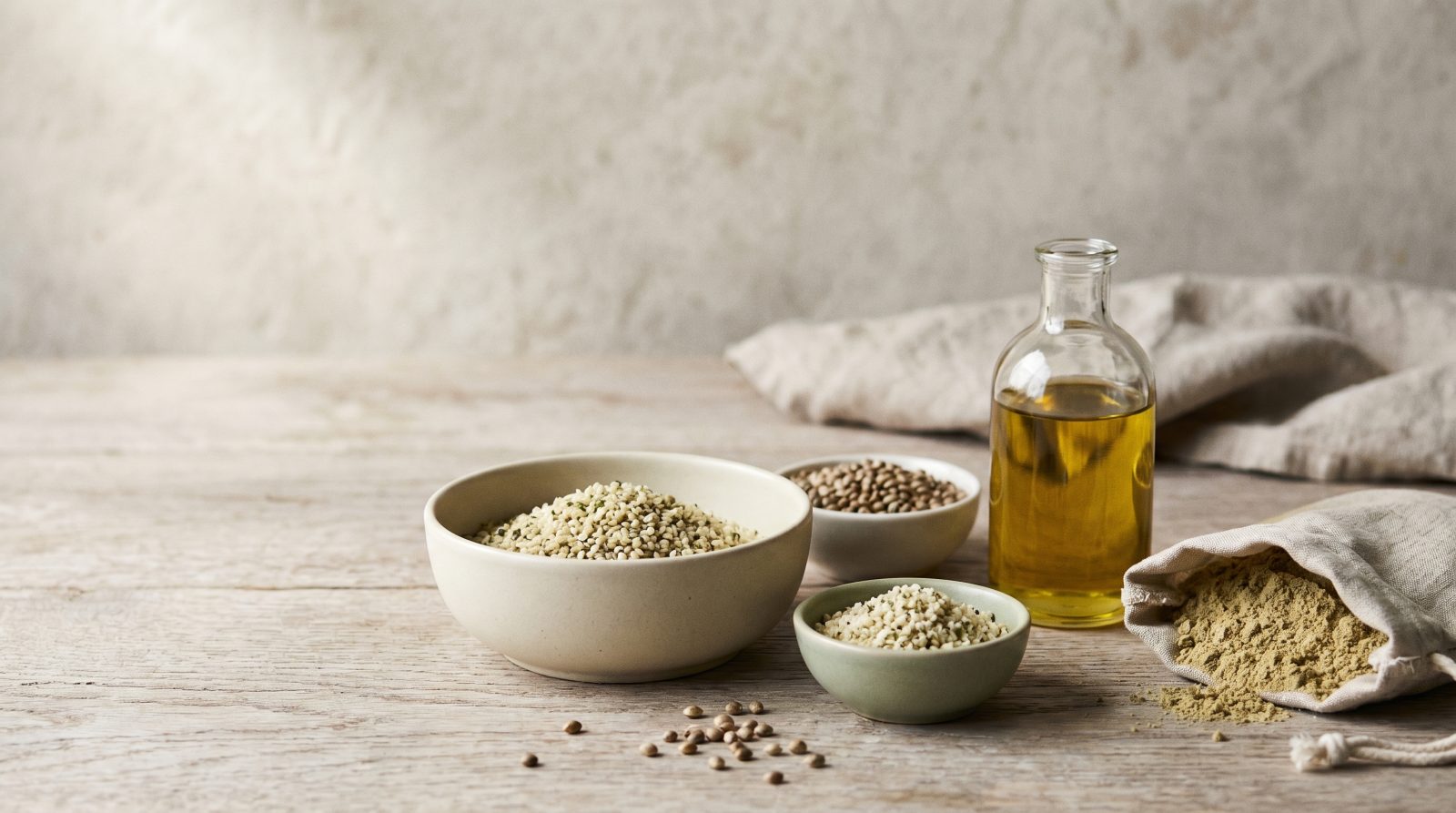
"Hemp food" on a Canadian grocery shelf refers to one of four distinct products derived from the same seed: whole hemp seed, hulled hemp seed, hemp seed oil, and hemp protein. Each has a different processing path and a different ideal use.
Whole hemp seed
The intact seed with its outer shell. Whole seed contains roughly 8 grams of fibre per 30 grams, several times the hulled form, but the shell is mildly bitter and chewy. Whole seed is the format used for sprouting, milling into flour, and pressing into oil. It keeps longer than hulled seed because the shell protects the inner kernel from oxidation. Canadian retail availability is limited compared to hulled seed; most whole hemp seed in Canada is sold through specialty health food stores or in bulk to processors.
Hulled hemp seed (hemp hearts)
The soft inner kernel with the shell mechanically removed. Hulled seed contains more protein and fat per gram than whole seed because the fibrous shell has been stripped away. It is mild, nutty, requires no cooking or grinding, and is the dominant retail format in Canada. Hemp hearts are widely stocked across Canadian grocery chains and have become the entry-point format most consumers encounter first.
Hemp hearts are interchangeably labelled "shelled hemp seed" on some packaging. The product is identical; only the marketing term differs.
Hemp seed oil
Cold-pressed from hemp seeds. Good-quality oil is green, with a nutty, slightly grassy flavour. It is roughly 80 percent polyunsaturated fat with the same fatty acid profile as the whole seed. Smoke point is approximately 165 degrees Celsius (330 degrees Fahrenheit), making it unsuitable for frying. Standard uses are dressings, drizzles over finished dishes, and cosmetic formulations. Refined hemp oil, processed for a neutral flavour, a higher smoke point and longer shelf life, is a separate product category used mostly by manufacturers; its fat is still mostly polyunsaturated, so it is not a frying oil either.
Hemp seed oil contains only trace cannabinoids. It is not CBD oil. The two products are distinct in source, regulation, and use; a dedicated article on this site covers the distinction in detail.
Hemp protein powder
Hemp protein is produced by pressing the oil out of whole or hulled seed, then milling the remaining cake. Standard hemp protein powder is 50 to 65 percent protein by weight, with the balance composed of residual fat, fibre, and the natural mineral content of the seed. Hemp protein blends often combine hemp with pea, brown rice, or sunflower seed protein to improve the amino acid profile or the texture.
Choosing between them
| For this purpose | Best format |
|---|---|
| Stirring into yogurt, oats, salads | Hulled hemp seed |
| Smoothies (protein focus) | Hemp protein powder |
| Dressings, finishing oil, raw drizzles | Hemp seed oil (cold-pressed) |
| Baking (partial flour substitution) | Hemp flour |
| Sprouting or grinding fresh | Whole hemp seed |
| Baking and gentle cooking with a neutral flavour | Refined hemp oil (specialty product) |