
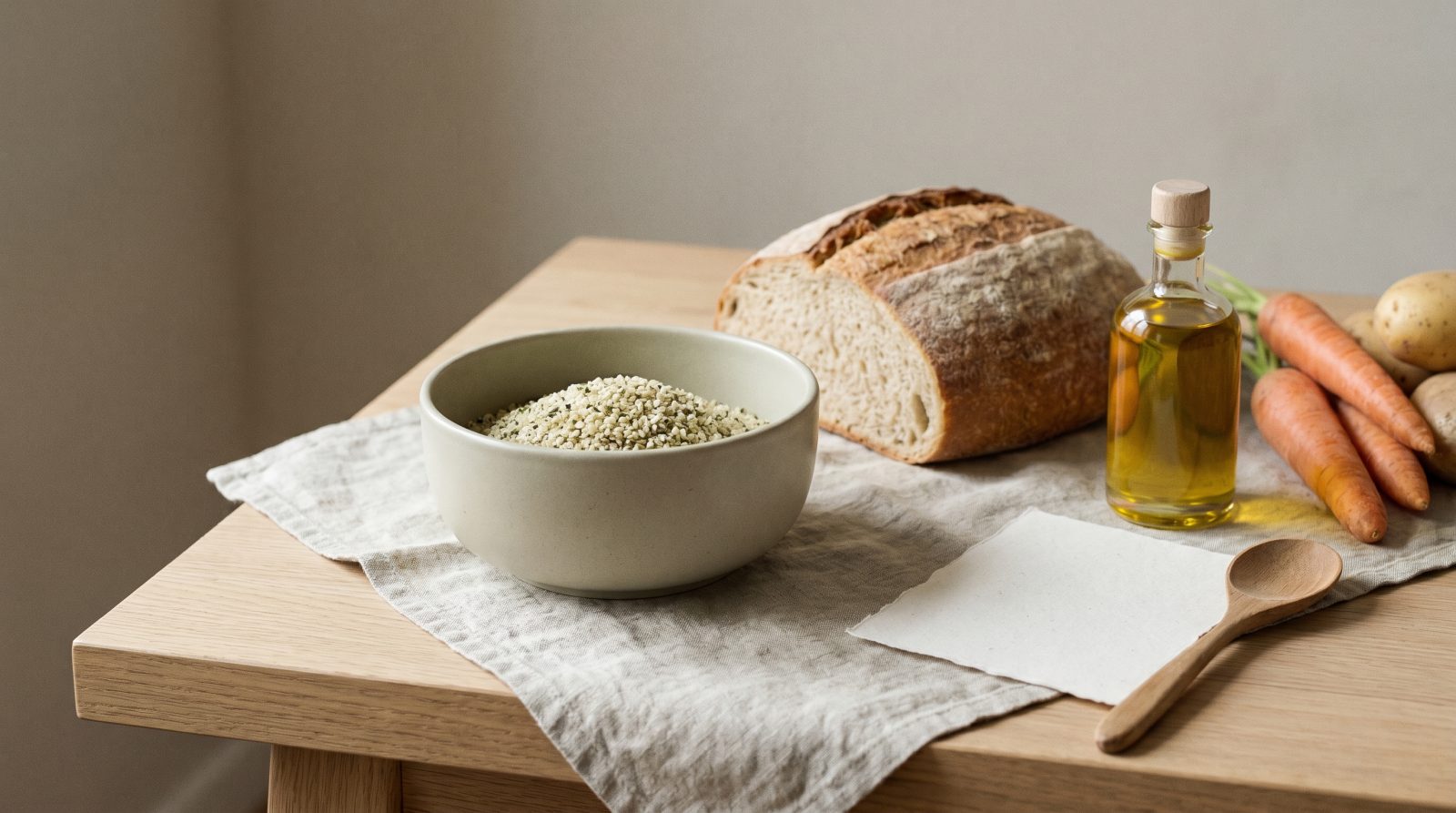
Hemp's nutritional advantage is its polyunsaturated fats, including alpha-linolenic acid (ALA, an omega-3) and gamma-linolenic acid (GLA). These fats degrade quickly at high heat. The single most important cooking principle for hemp foods is: keep the heat low, or add the hemp after the heat is off.
Why heat matters
Polyunsaturated fats contain multiple double bonds in their carbon chains, and each double bond is a site where the fat can oxidize. At temperatures above an oil's smoke point, this oxidation accelerates, producing aldehydes and other compounds with off flavours and limited nutritional value. The smoke point of cold-pressed hemp seed oil is approximately 165 degrees Celsius (330 degrees Fahrenheit), substantially below the temperature of pan-frying or roasting.
Practical heat tolerances by hemp product
| Product | Heat tolerance | Use |
|---|---|---|
| Hemp seed oil (cold-pressed) | Up to 165 °C / 330 °F | Raw only: dressings, drizzles, finishing |
| Hemp seed oil (refined) | Roughly 200–230 °C (supplier figures) | Baking and gentle cooking; still mostly polyunsaturated |
| Hemp hearts, raw | Up to 175 °C / 350 °F briefly | Topping, mixing into batters, baking inclusion |
| Hemp protein powder | Standard baking temperatures | Smoothies, baked goods (up to 25% of dry mix) |
| Hemp flour | Standard baking temperatures | Up to 25% substitution for wheat flour |
Five reliable applications
Breakfast. Two to three tablespoons of hemp hearts stirred into oatmeal, yogurt, or a smoothie bowl adds about 6 to 10 grams of complete protein with no preparation. Add after the oats are cooked, off the heat.
Salad dressings. Hemp seed oil substitutes one-for-one for olive oil in a vinaigrette. It pairs particularly well with apple cider vinegar, mustard, and herbs. Refrigerate prepared dressings and use within a week.
Finishing drizzle. Drizzle hemp seed oil over hot soups, roasted vegetables, or grain bowls after plating. The residual heat from the food is well below the oil's smoke point.
Baking inclusion. Hemp hearts can be folded into muffin, cookie, or bread batters up to about 1/4 cup per 1 cup of flour. Hemp flour substitutes for wheat flour at 15 to 25 percent of the dry mix; higher proportions weaken the gluten structure too much for a satisfactory rise.
Energy snacks. No-bake energy balls combining oats, nut butter, hemp hearts, and dried fruit keep refrigerated for a week and require no cooking at all.
What to avoid
Frying with cold-pressed hemp seed oil at typical pan temperatures (180 to 200 degrees Celsius) will smoke the oil quickly, oxidizing its fragile fats and producing bitter flavours. Substituting hemp flour for more than about 25 percent of wheat flour in a yeasted bread will produce a dense, gummy crumb because hemp contributes no gluten to the dough structure. Storing hemp seed oil at room temperature for extended periods accelerates rancidity; refrigerate after opening and use within about 3 to 8 weeks, or as the label directs.