
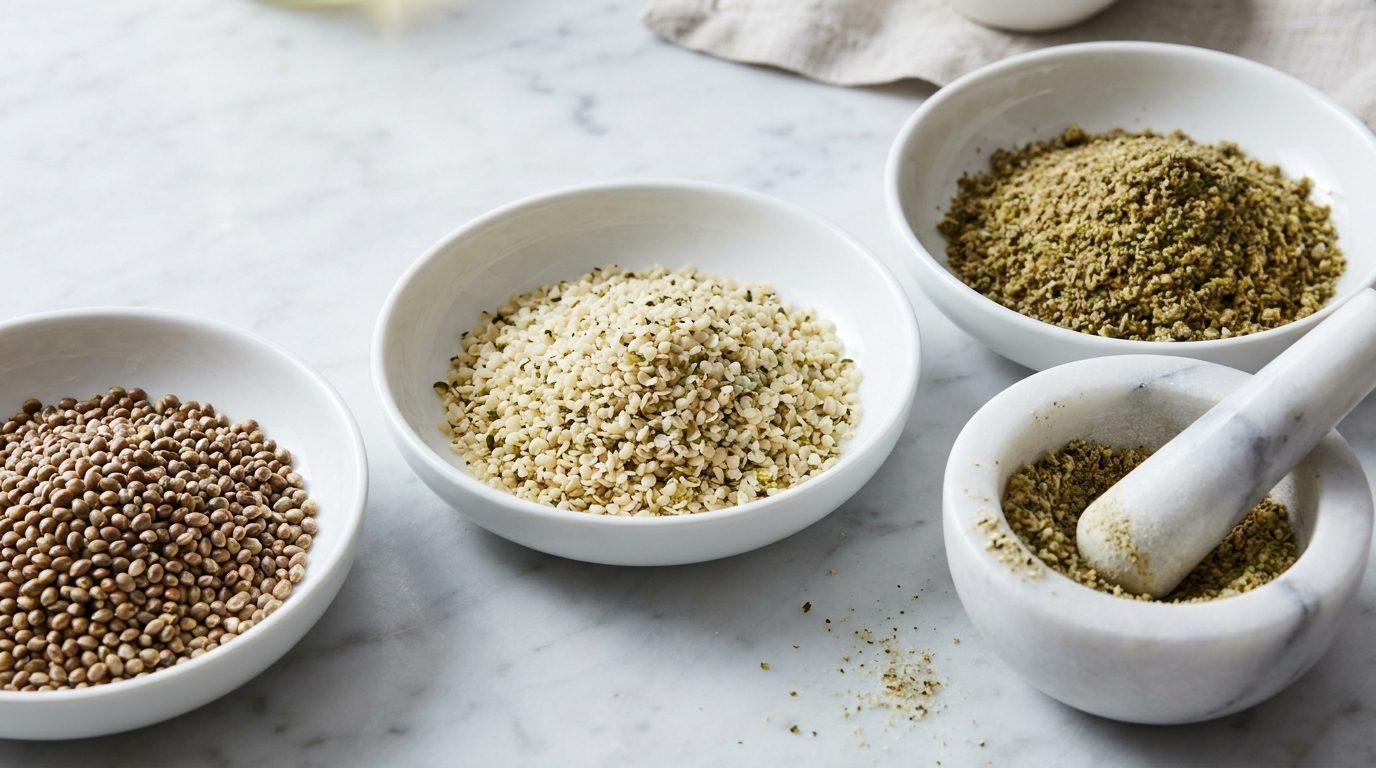
Yes, you can eat hemp seeds raw, whole, and unground, and your body will digest them completely. The grinding question almost always comes from people who learned the flaxseed rule, where whole seeds pass through undigested. Hemp does not work that way, and the difference comes down to the hull.
Why people think hemp seeds need grinding (and why flax is the culprit)
The advice to grind seeds before eating them is real, but it belongs to flax. A whole flaxseed has a hard, glossy shell that resists chewing and digestive acids, so most flaxseeds travel through the gut intact and surrender almost none of their omega-3s. Grinding flax is the only way to actually absorb what is inside.
That rule gets copied onto hemp by people who assume all small seeds behave alike. They do not. Hemp seed has a much softer, thinner hull that breaks down readily during chewing and digestion. There is no waxy seed coat sealing the nutrients away. So the single most common worry about hemp, that you are wasting it by eating it whole, is based on a seed that is not hemp.
A quick way to feel the difference yourself: bite into a whole hemp seed and a whole flaxseed side by side. The hemp gives a faint crunch and then a soft, nutty centre. The flax stays slick and stubborn. Your digestive system experiences the same contrast.
Can you eat hemp seeds raw?
Raw is the normal, intended way to eat them. The seeds you buy, whether labelled whole hemp seed or hulled hemp hearts, are not cooked, and they do not need to be. Sprinkle them straight onto yogurt, oatmeal, salad, toast, or smoothies. No toasting, no soaking, no grinding required.
Raw hemp also has a practical advantage. The fats in hemp seed are delicate polyunsaturated oils that prefer cool temperatures, so eating the seed raw protects the very omega fats people want from it. You can toast hemp seed lightly for flavour if you like a nuttier, warmer taste, but heat is a choice, never a safety step. There is no toxin, no enzyme inhibitor, and no anti-nutrient in hemp that cooking is required to neutralize.
Whole seed versus hemp hearts: digestion, fibre, and texture
Both forms are fully edible raw and unground, but they are not identical. Whole hemp seed keeps its soft outer hull; hemp hearts (also called hulled or shelled hemp seed) have that hull mechanically removed, leaving the tender inner kernel. The choice changes texture, fibre, and how the seed behaves in food.
| Feature | Whole hemp seed | Hemp hearts (hulled) |
|---|---|---|
| Texture | Slight crunch from the hull | Soft, almost creamy |
| Fibre | Higher (hull is mostly fibre) | Lower (hull removed) |
| Digestibility | Fully digestible raw; hull adds roughage | Very easy on the gut |
| Best for | Crunch, extra fibre, sprinkling | Smoothies, baby food, blending, mild flavour |
The fibre point is the one worth understanding. Most of a hemp seed's fibre lives in the hull, so whole seed gives you noticeably more roughage per spoonful, while hemp hearts are richer in protein and fat by weight because the fibrous coat is gone. Neither is better in absolute terms; they suit different goals. If you want the gentlest possible option for a child, a sensitive stomach, or a creamy blend, reach for hearts. If you want extra fibre and a bit of bite, whole seed delivers it without any grinding.
If you are trying to decide which form to actually buy, that is a separate question of price, shelf life, and use, and you will find a dedicated buyer's guide along with the rest of the seed library in our article index.
How much hemp seed should you eat in a day?
A common everyday serving is a few tablespoons, often around two to three, which fits easily onto a meal and gives a meaningful dose of plant protein and omega fats. There is no official daily prescription, and you do not need to weigh anything. Treat it the way you would any nutritious whole food: a reasonable, repeatable amount you enjoy.
Two gentle cautions, both about comfort rather than danger:
- Start modestly if you are new to it. Hemp seed is rich in fat and, in whole form, fibre. Jumping straight to large amounts can feel heavy or loosen the stomach for some people. Build up over a week or two.
- Whole seed adds more fibre than hearts. If you suddenly add several tablespoons of whole hemp seed and feel bloated, the fibre is the likely cause. Drink water alongside it, or switch part of your intake to hearts.
For most healthy adults, a daily spoonful or three is a sustainable habit rather than something to ration carefully.
Do you need to soak hemp seeds?
No. Soaking is genuinely useful for seeds and grains that carry tough hulls or notable enzyme inhibitors, where a soak softens the coat and improves digestibility. Hemp needs neither. The hull is already soft, and the seed is already easy to digest raw, so soaking accomplishes nothing nutritionally and mostly just makes the seeds soggy.
There are only two reasons you might wet hemp seed on purpose, and neither is about digestion:
- Making hemp milk. Blending hemp hearts with water and straining produces a creamy plant milk. That is a recipe step, not a soaking requirement.
- Sprouting. Some people sprout viable whole hemp seed, which does involve soaking to start germination, but that is a distinct project with its own method, not something the everyday eater needs to do.
For ordinary eating, skip the soak entirely.
How to store hemp seed so it stays worth eating raw
Because raw hemp keeps its delicate oils intact, the real maintenance is storage, not preparation. Those polyunsaturated fats can turn rancid if left warm and exposed to air and light. A rancid seed tastes sharp, bitter, or paint-like instead of soft and nutty, which is the clearest signal to throw it out.
To keep hemp at its best, store it in an airtight container, away from heat and light, and refrigerate it once opened (the freezer is even better for long-term holding). Cold storage does not harm the seed and noticeably extends how long it stays fresh. Smell or taste a few seeds before adding them to food if a bag has been open a while; fresh hemp should be mild and pleasant.
So the whole routine comes down to this: buy hemp seed, keep it cold, and eat it straight from the container. No grinder, no soaking bowl, no toasting pan. Sprinkle a couple of tablespoons of whole seed or hearts onto whatever you are already eating, and you have used the seed exactly the way it is meant to be used, raw and intact.