
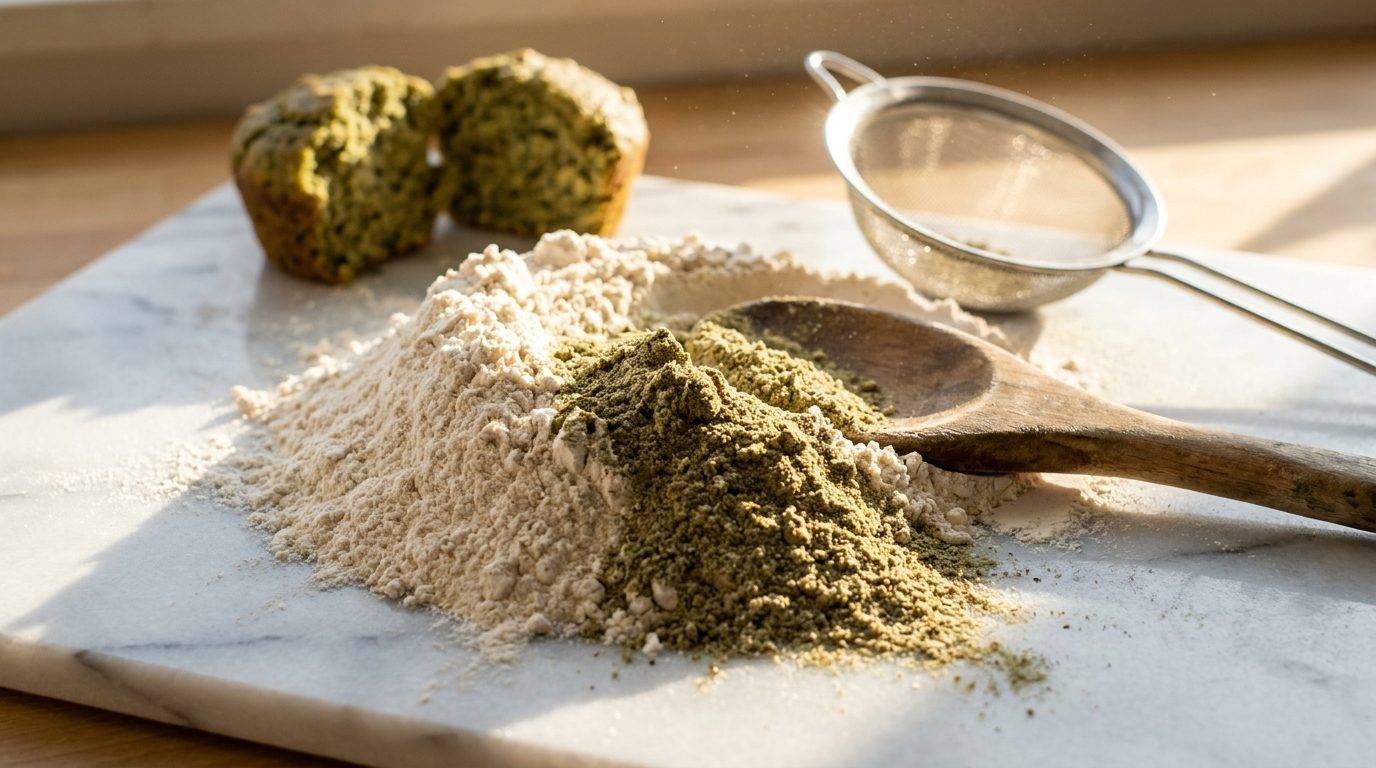
Hemp flour behaves nothing like wheat flour, and most disappointing hemp baking comes from swapping the two one-for-one. Get the ratio and the liquid right and hemp earns its place in the mix; get them wrong and you produce a dense green brick.
What hemp flour actually is
Hemp flour is the press cake left after oil is squeezed from the seed, milled to a powder. That origin explains everything about how it bakes. It is high in protein and fibre, has essentially no starch, contains no gluten, and still carries residual oil from the pressing — which is why it is thirsty in a batter, heavy in a crumb, and perishable on the shelf.
Note that hemp flour and hemp protein powder are closely related products separated mainly by how finely the cake is milled and sifted, and the labels are used loosely across brands. If your bag is coarse and speckled, treat it as flour; if it is fine and sold as a protein supplement, it will still bake, but expect it to be even thirstier.
The substitution ceiling
Hemp flour cannot carry structure. Wheat flour contributes gluten for elasticity and starch for set; hemp contributes neither. Every gram you swap in is a gram of structural capacity removed, which is why there is a ceiling on how much any given recipe will tolerate.
Work by weight rather than by cup, because hemp flour is lighter and fluffier than wheat and volume measures mislead. Start conservative — around 15 percent of total flour weight — bake it once, then push higher if the crumb held. A recipe that fails at 30 percent often works beautifully at 20.
Adjusting liquid, fat and leavening
Three adjustments turn a mediocre hemp bake into a good one:
- Add liquid. Roughly one to two extra tablespoons per quarter cup of wheat flour replaced. Hemp fibre absorbs slowly, so a batter that looks correct when mixed can be dry by the time it bakes.
- Rest the batter. Ten minutes on the counter lets the fibre hydrate fully. This single step fixes more gritty, dry hemp bakes than any other change.
- Nudge the leavening. A heavier batter needs a little more lift — about a quarter more baking powder is usually enough. In gluten-free recipes, add a binder such as egg, ground flax or psyllium to replace the structure hemp cannot provide.
One more: drop the oven about ten degrees and add a few minutes. Hemp's protein and residual oil brown faster than starch does, so a standard temperature can darken the crust before the centre sets.
Ratios by baked good
| Item | Hemp flour share (by weight) | Notes |
|---|---|---|
| Muffins, quick breads | 20–25% | Most forgiving format; moisture from fruit or yogurt helps |
| Pancakes, waffles | 20–30% | Thin the batter more than feels right; rest before cooking |
| Cookies, energy bars | 15–25% | Fat-rich doughs mask dryness; hemp suits chewy over crisp |
| Yeast bread | 10–15% | Gluten dilution is the limit; expect a tighter, moister crumb |
| Pizza dough, flatbread | 10–15% | Adds a savoury nuttiness that works well here |
| Delicate cakes, pastry | up to 10% | Anything more collapses the texture these rely on |
Flavour, colour and what to pair it with
Hemp flour bakes to a green-grey crumb and tastes nutty, faintly grassy and slightly bitter. Neither is a defect, but both need partners. It works with cocoa, dark chocolate, banana, molasses, dates, maple, cinnamon, orange zest, rye and buckwheat — flavours with enough weight to meet it. It fights with delicate vanilla sponges, lemon cakes and anything where a pale crumb is part of the appeal.
If the colour bothers you, cocoa is the simplest fix: a chocolate muffin at 25 percent hemp flour reads as chocolate, full stop. For a broader look at where hemp fits in everyday cooking, the article library covers the rest of the pantry.
What goes wrong, and the fix
- Dry and crumbly. Not enough liquid, or no resting time. Add liquid and rest the batter next time.
- Gummy or damp in the middle. Hemp share is too high, or it needed longer at a lower temperature. Drop the ratio by five points.
- Noticeably bitter. Either too much hemp for that recipe, or the flour itself is past its best — hemp flour retains oil and does go rancid.
- Rose then sank. Leavening is outpacing the structure. Reduce the hemp share rather than adding more baking powder.
Store hemp flour sealed in the fridge or freezer, buy bags small enough to use within a few months, and smell it before each bake. Fresh hemp flour smells green and nutty; rancid hemp flour smells sharp and faintly like old crayons, and it will make an otherwise perfect recipe taste wrong.
If you are starting today, take a muffin recipe you already trust, replace 20 percent of the flour weight with hemp flour, add two tablespoons of milk or yogurt, rest the batter ten minutes, and bake at ten degrees below the stated temperature for a few minutes longer. That one test tells you more about your flour and your oven than any general rule, and it gives you a working baseline to adjust from for every other recipe.